 |  |
Debt Market Outlook
|
AS ON 31ST MARCH 2026
|


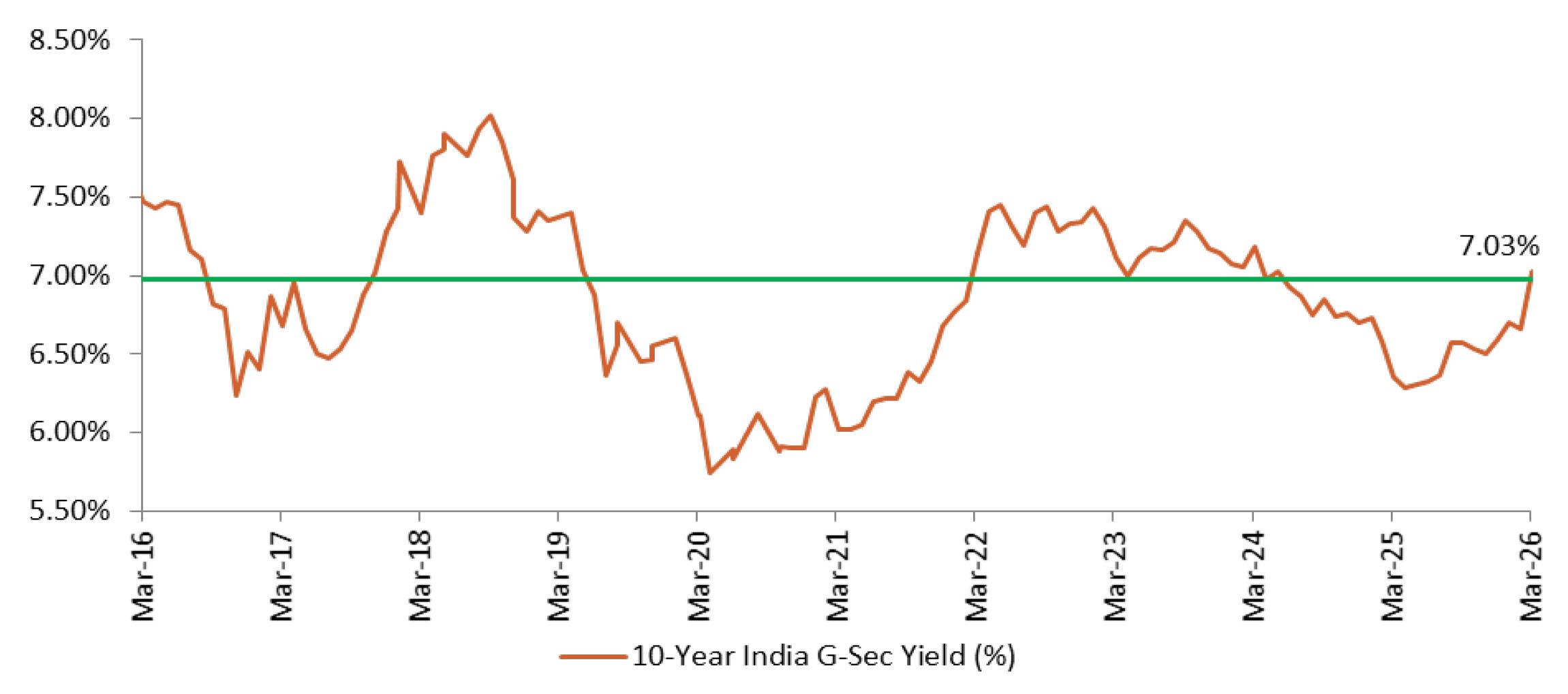
The West Asia crisis has emerged as the dominant driver of global bond markets since March 2026. Iran’s closure of the Strait of Hormuz has disrupted nearly 20% of global energy supplies, triggering a sharp surge in crude oil prices. Brent crude spiked to around US$120/bbl from pre‑conflict levels of ~US$70/bbl, before easing to the current range of US$100–110/bbl.
Amid these adverse global cues, Indian government bonds have come under pressure, with the benchmark 10‑year yield rising by about 43 bps over the period. The situation in West Asia remains fluid, with no meaningful signs of de‑escalation so far.
The near‑term outlook for bonds therefore remains cautious. While the Trump administration has indicated that it is close to achieving its stated military objectives and expects the conflict to conclude over the next 2–3 weeks, tangible progress towards peace has been limited. Markets continue to closely monitor several key developments:
(i) availability of oil and gas supplies for India
(ii) the risk of a broader regional spillover and potential damage to energy infrastructure across Gulf nations
(iii) any further escalation of hostilities
(iv) the resulting policy response from the RBI amid rising inflationary risks
Against this backdrop, we expect the Indian 10‑year government bond yield to trade in the range of 6.95–7.25% in the near term.
