
Market Outlook
|
AS ON 29th February 2024
|


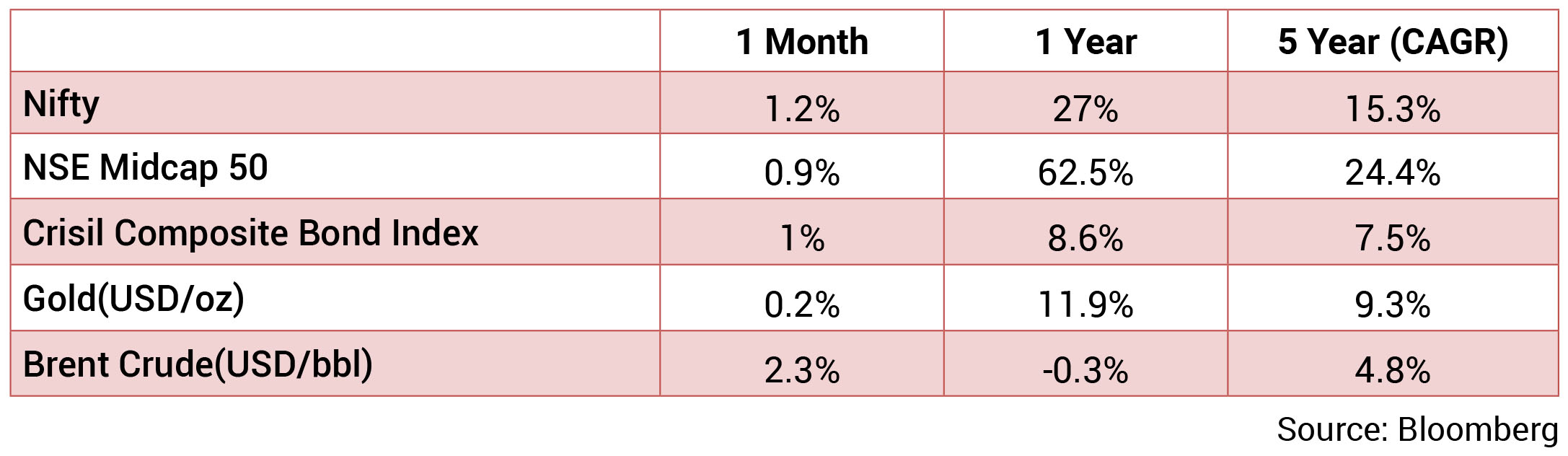
Market sentiments remained buoyant, after decent 3QFY24 corporate earnings with uptick in revenue
growth and margin expansion. Large-caps (+2.7%) performed well during the month, outperforming both
mid-caps (+1.3%) and small-caps (-1.1%). Nifty gained (+1.2% MoM), having slipped from its then lifehighs
of 22,220 levels seen in the second half, and ended the month at 21,983. The index however hit
a fresh high crossing 22,400 on 2nd Mar after a robust Q3FY24 GDP number of 8.4% (GVA - 6.5%). INR
appreciated 0.2% over the month and ended the month at 82.91/USD. DXY gained +0.9% over the month,
ending at 104.2. 10yr benchmark yields traded in a narrow range of 7.06%-7.11% and eventually ended the
month 6 bps lower sequentially at 7.08%. The 10y benchmark averaged 7.08% in February 2024.
Macroeconomic outlook in the emerging and developing world vary widely ranging from property sector contraction and deflation in China to steady expansion in certain geographies such as the US and India. Global headline inflation has moderated, pushing financial markets to expect that monetary policy easing is round the corner; but the gap between central banks and investors persists. Headline inflation, while moderating, still remains above the target in major economies. If inflation at above target levels turns to be sticky, it will limit the magnitude of easing in an environment of solid growth and labor markets tightness.
On the domestic front, India’s Interim Budget prioritized fiscal consolidation and refrained from making any major announcements. Fiscal deficit for FY2024 is now projected at 5.8% of GDP, slightly less than was budgeted number of 5.9% of GDP. The budget for FY25 targets a fiscal deficit of 5.1% of GDP. The recent budgets have been pushing on capital expenditure. In FY24, despite the deficit narrowing from 6.4% of GDP to 5.8%, central capex rose sharply from 2.7% of GDP in FY23 to 3.2% of GDP in FY24. The pace of capex is expected to slow in FY25 with the budget pegging capex to increase by another 0.2% of GDP to 3.4% in FY25.
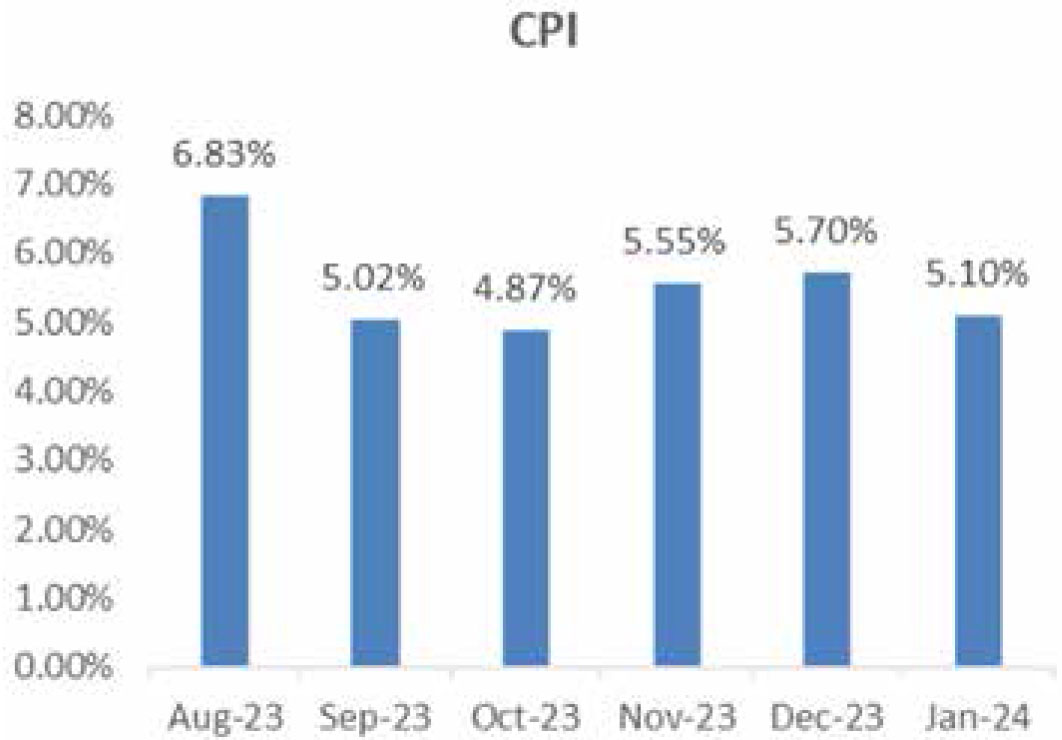
India’s CPI softened to 5.1% from 5.7% in December, though largely on favorable base effects. Core inflation has continued to remain soft, reflecting lower input prices and softening inflation expectations. The February MPC meeting held policy rates at 6.5%, with the Committee reiterating its “withdrawal of accommodation stance” and cautious tone, bucking expectations of a slightly softer tone. The RBI has however been conducting a series of fine-tuning liquidity operations and has helped push down overnight money-market rates from about 6.8% closer to the policy rate of 6.5%.
Oil prices moved up 2.2% in February, following a rise of 6.6% in January. Brent Crude is currently trading around US$83/barrel, broadly the same level as of the end of January.
Macroeconomic outlook in the emerging and developing world vary widely ranging from property sector contraction and deflation in China to steady expansion in certain geographies such as the US and India. Global headline inflation has moderated, pushing financial markets to expect that monetary policy easing is round the corner; but the gap between central banks and investors persists. Headline inflation, while moderating, still remains above the target in major economies. If inflation at above target levels turns to be sticky, it will limit the magnitude of easing in an environment of solid growth and labor markets tightness.
On the domestic front, India’s Interim Budget prioritized fiscal consolidation and refrained from making any major announcements. Fiscal deficit for FY2024 is now projected at 5.8% of GDP, slightly less than was budgeted number of 5.9% of GDP. The budget for FY25 targets a fiscal deficit of 5.1% of GDP. The recent budgets have been pushing on capital expenditure. In FY24, despite the deficit narrowing from 6.4% of GDP to 5.8%, central capex rose sharply from 2.7% of GDP in FY23 to 3.2% of GDP in FY24. The pace of capex is expected to slow in FY25 with the budget pegging capex to increase by another 0.2% of GDP to 3.4% in FY25.
India’s CPI softened to 5.1% from 5.7% in December, though largely on favorable base effects. Core inflation has continued to remain soft, reflecting lower input prices and softening inflation expectations. The February MPC meeting held policy rates at 6.5%, with the Committee reiterating its “withdrawal of accommodation stance” and cautious tone, bucking expectations of a slightly softer tone. The RBI has however been conducting a series of fine-tuning liquidity operations and has helped push down overnight money-market rates from about 6.8% closer to the policy rate of 6.5%.
Oil prices moved up 2.2% in February, following a rise of 6.6% in January. Brent Crude is currently trading around US$83/barrel, broadly the same level as of the end of January.
MPC: The RBI MPC voted with a 5-1 majority to hold the repo rate at 6.5% (Dr Varma voted for a 25 bps cut)
and to maintain the stance at “withdrawal of accommodation” (Dr Varma voted for change to neutral). The
MPC projected real GDP growth at 7% in FY2025 with upward revisions to their earlier quarterly estimates.
The MPC projected average CPI inflation at 4.5% in FY2025. The MPC noted that monetary policy actions’
pass-through was keeping core inflation in check and supply-side responses may keep food prices under
check. However, considerable uncertainties remain from adverse weather conditions, geopolitical events
impacting supply chains, and volatility in global financial markets.
CPI: January CPI inflation at 5.1% (December: 5.7%) was broadly in line with expectations. Sequentially, headline inflation contracted by 0.1% (December: (-)0.3%) led mainly by vegetables, followed by fruits, spices, pulses, and oils and fats. Meanwhile, prices of cereals, meat and fish, and eggs increased in January. Core CPI inflation (CPI, excluding food and beverages, and fuel) was at 3.5% (December: 3.8%). Sequentially, core CPI increased by 0.3% (December: 0% mom), led by higher medical costs, bus/tram fares, and gold.
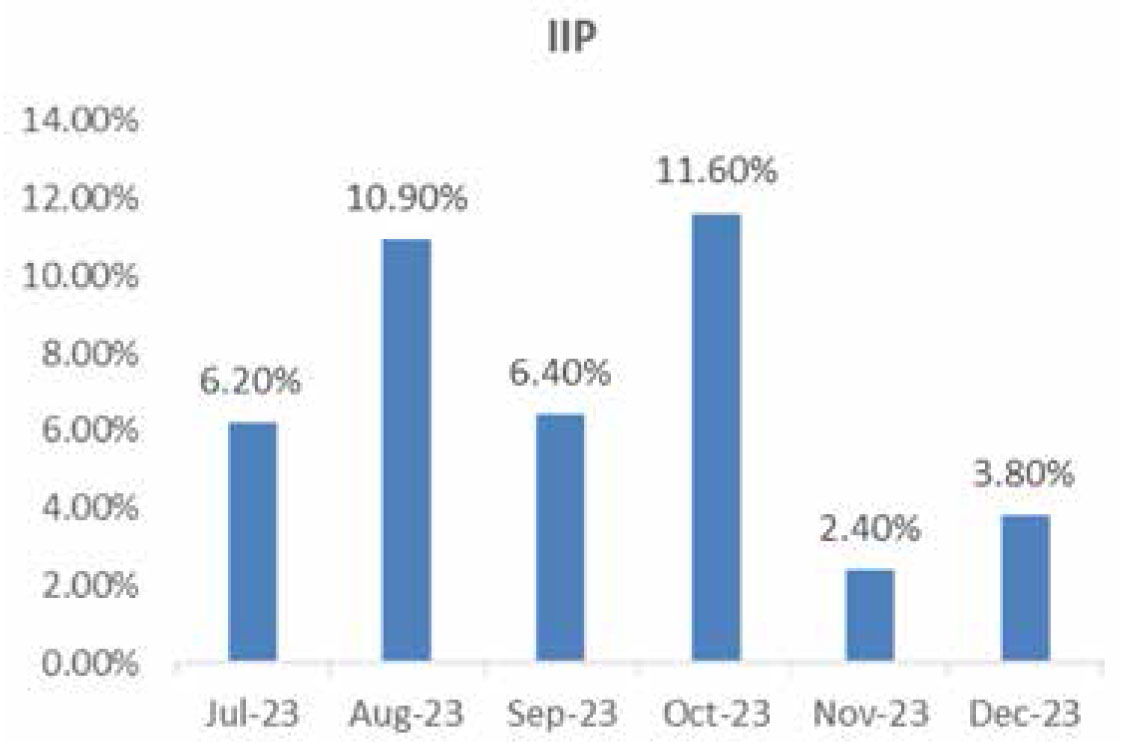
IIP: Despite an unfavorable base effect in December, IIP growth increased by 3.8% (November: 2.4%) led by manufacturing activity. Sequentially, IIP increased by 7.4% (November: (-)2.4% mom) as activity normalized post festive season. As per the sectoral classification, manufacturing activity increased by 3.9% (November: 1.2%), while mining and electricity production, though positive, moderated from November. As per the use-based classification, all categories registered positive growths led by consumer durables, primary goods, and infrastructure goods.
Trade: Exports in January moderated to US$36.9 bn (December: US$38.5 bn) due to a fall in non-oil exports to US$28.7 bn (US$31.6 bn). Oil exports, however, increased to US$8.2 bn (December: US$6.9 bn), likely due to higher volumes. Imports in January fell sharply to US$54.4 bn (December: US$58.3 bn), led by a fall in non-oil imports to US$37.8 bn (US$43.3 bn). Overall, The trade deficit in January softened to US$17.5 bn.
CPI: January CPI inflation at 5.1% (December: 5.7%) was broadly in line with expectations. Sequentially, headline inflation contracted by 0.1% (December: (-)0.3%) led mainly by vegetables, followed by fruits, spices, pulses, and oils and fats. Meanwhile, prices of cereals, meat and fish, and eggs increased in January. Core CPI inflation (CPI, excluding food and beverages, and fuel) was at 3.5% (December: 3.8%). Sequentially, core CPI increased by 0.3% (December: 0% mom), led by higher medical costs, bus/tram fares, and gold.
IIP: Despite an unfavorable base effect in December, IIP growth increased by 3.8% (November: 2.4%) led by manufacturing activity. Sequentially, IIP increased by 7.4% (November: (-)2.4% mom) as activity normalized post festive season. As per the sectoral classification, manufacturing activity increased by 3.9% (November: 1.2%), while mining and electricity production, though positive, moderated from November. As per the use-based classification, all categories registered positive growths led by consumer durables, primary goods, and infrastructure goods.
Trade: Exports in January moderated to US$36.9 bn (December: US$38.5 bn) due to a fall in non-oil exports to US$28.7 bn (US$31.6 bn). Oil exports, however, increased to US$8.2 bn (December: US$6.9 bn), likely due to higher volumes. Imports in January fell sharply to US$54.4 bn (December: US$58.3 bn), led by a fall in non-oil imports to US$37.8 bn (US$43.3 bn). Overall, The trade deficit in January softened to US$17.5 bn.
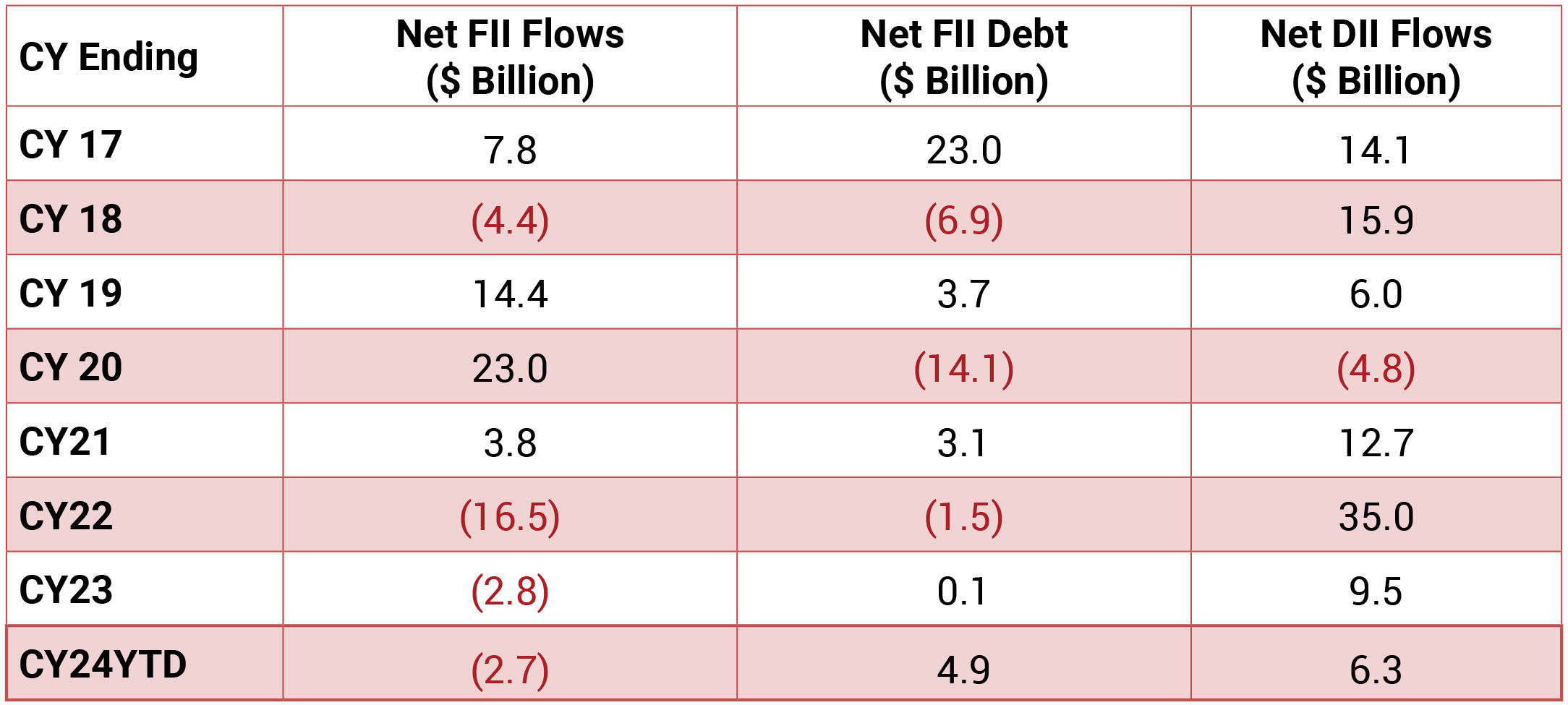
FIIs bought US$0.5 bn in equity and US$2.4 bn in debt in the month of Feb 2024. DIIs remained
net buyers to the tune of $3.1bn in Feb 2024.
