 |  |
Debt Market Outlook
|
AS ON 30TH APRIL 2026
|


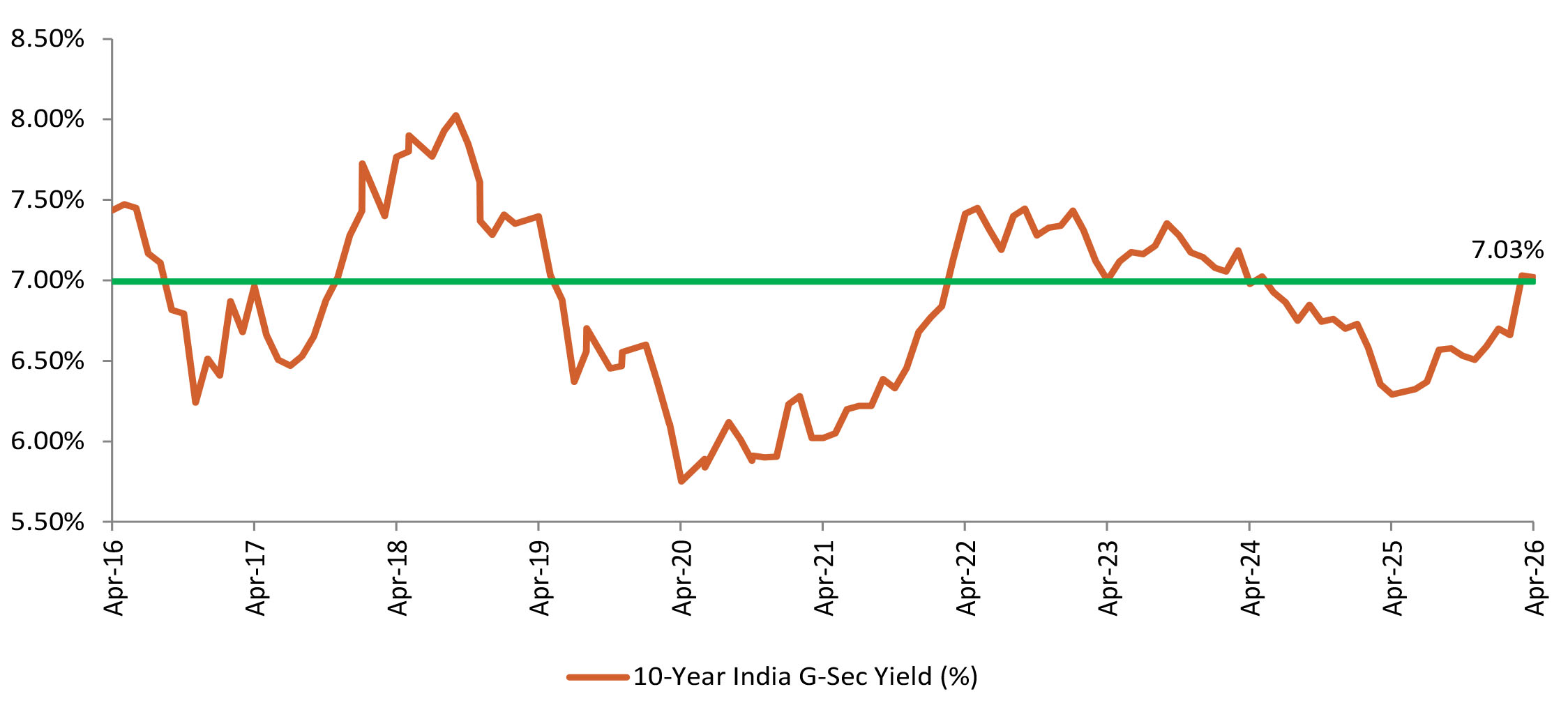
The ceasefire between US and Iran struck in the early part of April was short-lived as eventual peace negotiations did not materialize into anything concrete, and the Strait of Hormuz remains blocked. While oil prices fell to around US$85/ bbl on the ceasefire, prices eventually reached fresh highs of US$126/bbl in the aftermath of failed negotiations before settling lower around US$114/bbl currently. Bond yields in G4 economies firmed up due to rising inflationary pressures and expectations of early policy rate hikes. However, all central banks held rates steady in April, indicating willingness to wait and watch, while highlighting the inflationary risks. Accordingly, the global yields softened following the policy guidance. The benchmark Government of India 10Y bond yield softened to below 6.9% on news of ceasefire and subsequent fall in oil prices, however closed April higher at 7.02%, largely driven by high oil prices. Domestic bond markets remain under pressure as the Strait of Hormuz blockade continues to point towards energy shortage and the consequent inflationary concerns. We expect the benchmark India 10Y bond yield to trade between 6.90% to 7.10% in the near term.
