Close

Buy a Life Insurance Plan in a few clicks

Now you can buy life insurance plan online.

Kotak Fortune Maximiser

Create wealth through bonus payout from 1st policy year

Kotak Assured Savings Plan

A plan that offer guaranteed returns and financial protection for your family.

Kotak Guaranteed Fortune Builder

A plan that offers guaranteed income for your future goals.


Savings Plan

A savings plan is a financial instrument designed to help you systematically save money over a period to build a ... financial corpus. These plans often combine the benefits of an investment product with a life insurance policy. The primary goal is to instill a disciplined approach to saving, ensuring you can meet your long-term financial objectives, such as funding your child's education, purchasing a home, or planning for a comfortable retirement.

Kotak Assured Savings Plan

Secure your future!

Savings-Plan

Pay ₹10,000

per month for 10 years

Savings-Plan

Get ₹24,69,324

at the end of 20th year

tick

Death benefit/Life cover upto: ₹24,69,324# | Guaranteed@ Returns

25years

25+

Years of protecting life

0% GST&

On premiums

30-Day

return policy (Free- Look period)

12.21%

Solvency Ratio as on March’26

Be Future Ready With Our Savings Plan

  • Savings Plan for
    HNI

  • Savings Plan for
    middle class

  • Savings plan for
    low-income earners

Kotak Fortune Maximiser

Starts with ₹40,000/monthlyπ for 10 years

Get ₹1,56,341 p.a. @8%ß

₹86,618 p.a. @4%ß from the end of 1st year till age 85

Maturity benefit of

₹3,36,90,162 @8%ß ₹60,67,206 @4%ß p for 10 years

Get my Plan
intersect intersect reverse

Key highlights

  • tick Multiple Plan Options
  • tick Long Life Cover till 85 years
  • tick ­©6 Additional Riders
  • tick Choose between regular cash payouts / accumulate to create a corpus.

What You Get:

  • Financial Legacy: Specifically designed to leave a financial legacy for the next generation.

  • Multiple Withdrawals – Up to 6 Paid-Up Additions encashments per year (min ₹3,000 each)

  • Encashment Flexibility: Withdraw Paid-Up Additions anytime from 2nd policy year

  • ^Tax Benefits: Premiums & payouts eligible under Income Tax Act, 2025 (subject to prevailing tax laws and applicable regime)

Kotak Guaranteed Fortune Builder

Starts with

₹ Rs 10,000/monthα for 12 years

Wait for 5 year

Get

₹1,70,808/yearfor 25 years ₹13,63,632 as return of premium.

Get my Plan
intersect intersect reverse

Key highlights

  • tick @Guaranteed long-term income for upto 25 years
  • tick Option to get 100% return of premium
  • tick Child’s Future Secured with Guaranteed Payouts

What You Get:

  • Choice of Returns: Long-Term Income (with 100% ROP) or Assured Wealth (Lump Sum)

  • Life Cover: Included for Family Security

  • Flexibility: Opt for riders for enhanced protection

Kotak Assured Savings Plan

Starts from

₹ Rs 10,000/Month# for 10 years

Get

₹24,69,324#at the end of 20th year.

intersect intersect reverse

Key highlights

  • tick @Guaranteed Maturity Benefit
  • tick Life Cover
  • tick Upto 10% of Cumulative Annualized Premium as Guaranteed Yearly Additions + Upto 20% of Basic Sum Assured as Guaranteed Loyalty Addition
  • tick ©6 Riders for Extra Protection

What You Get:

  • Life Cover: Get Life cover which is equal to maturity benefit.

  • Multiple premium payment terms: Suitable for long term and short-term affordability

  • ^Tax Benefits: Premiums deductible under Section 123 read with Schedule XV & payouts tax-exempt under Section 11 read with Schedule II(2) of the Income Tax Act, 2025

What are Savings Plans & How They work?

A savings plan is usually a life insurance product that combines regular savings with financial protection for your family. In simple terms, you pay premiums over a chosen period, and the plan builds a corpus for your future needs. It also offers a death benefit if something happens to the life assured during the policy term.

For most people, saving is about putting money aside, letting it grow, and using it later. A savings plan follows the same broad idea, but with more structure. Instead of relying on convenience-based saving, it pushes you into a planned contribution pattern.

Some savings plans focus on a lump sum at maturity, others lean toward regular income. Some give you a choice between immediate income and deferred income, while some also include money-back style benefits, flexible premium payment options, and rider choices depending on the plan design.

How Does a Savings Plan Work in India?

In India, a savings plan usually starts with four choices: how much premium you can pay, how long you want to pay it, how long you want the policy to run, and what kind of payout you want at the end. Depending on the plan, you may choose a lump sum maturity amount, regular income after a deferment period, or a mix of both.

Here is how it works:

Some plans also allow extra flexibility. For example, insurer offerings in the market include limited-pay structures, optional riders, policy loan features, spouse cover in certain variants, and long-term income options that can continue for many years.

Why Invest in a Savings Plan?

Investing in the best saving plan in India is a strategic decision that offers a structured approach to ​​boost your savings with guaranteed results. After understanding ​​what is savings plan, let us understand why you should invest in savings plan:


Financial discipline

A savings plan instills a habit of regular saving through mandatory periodic premium payments. This systematic approach ensures that you consistently set aside a portion of your income for the future. It automates the process of saving, prevents impulsive spending, and ensures you stay on track toward building a substantial financial corpus.

Wealth creation

Through investment components that benefit from the power of compounding, savings plans help your funds grow into a significant corpus. Whether through guaranteed returns in traditional plans or market-linked growth in ULIPs, they are designed for long-term wealth creation.

Tax benefits

These plans offer valuable tax advantages under the Income Tax Act, 2025 (effective April 1, 2026). The premiums you pay are eligible for a deduction of up to ₹1.5 lakh under Section 123 read with Schedule XV, which replaces the erstwhile Section 80C of the Income Tax Act, 1961, and reduces your taxable income. Furthermore, the maturity and death benefits remain tax-exempt under Section 11 read with Schedule II(2), ,ensuring your returns are as tax-efficient as possible.

Goal-based planning

Savings plans are an excellent tool for achieving specific life goals. You can align the policy's tenure and maturity payout with a future milestone, such as your child’s higher education, their wedding, or your own retirement. This goal-oriented structure ensures that you have the required funds available exactly when you need them.

Low risk options

For investors who are risk-averse, savings plans offer a safe and secure investment avenue. Traditional plans like endowment and money-back policies provide guaranteed returns and capital protection, making them a stable choice. This allows you to grow your wealth steadily without being exposed to the volatility of the equity market.

Importance of Buying the Best Savings Plan

Buying a savings plan is a good decision, but buying the right savings plan is important. The gap between the two can cost you significantly over a 15 to 25-year horizon. Here is why choosing the best savings plan is important:

You are Making a Long-term Commitment

A great savings plan is a powerful tool designed to reward steady, long-term commitment. By staying invested for the full policy term (15, 20, or 30 years), you give your money the time it needs to grow and generate maximum wealth. Choosing the perfect plan from the very start ensures that your investments seamlessly match your evolving life goals.

A Lower Premium Does Not Always Mean a Better Deal

A plan with a lower annual premium might look attractive upfront, but the maturity benefit, bonus* potential, and rider options may be far weaker. Two plans at different premium points can give different outcomes at maturity. It is not about "what can I pay the least?" but more importantly "what do I actually get for what I pay?"

​​Your Life Cover Needs to Be Sufficient

The savings component of a plan often gets more attention than the insurance component. If you are choosing a savings plan partly because it offers life cover, that cover needs to be adequate. A sum assured that cannot replace your income for even two years is of no practical use to your family. The right plan balances a meaningful corpus at maturity with a death benefit that your family can genuinely rely on.

​​The Insurer's Credibility is Non-negotiable

You are trusting an insurer to pay out 20 or 30 years from now. That makes their financial track record, specifically their claim settlement ratio and solvency ratio, a critical part of the decision. A plan from an insurer with a consistently high settlement ratio and strong financials gives you real confidence. A plan that looks good on paper but comes from a financially unstable insurer is a risk you should not take with a decades-long commitment.

Benefits of Having a Savings Plan

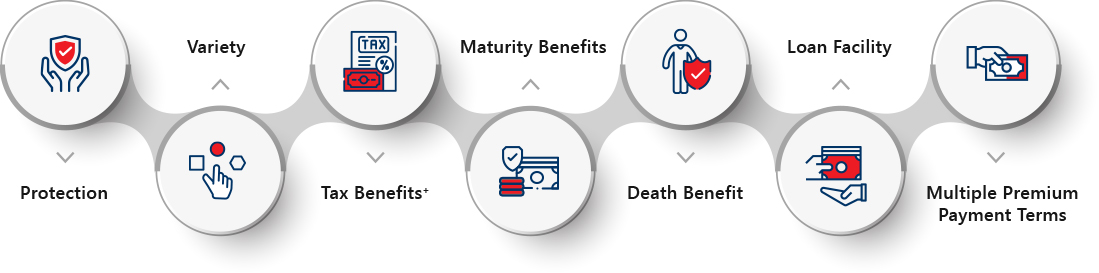
Saving investment plans help you grow your money systematically while securing your family's future. The infographic alongside highlights the key benefits of insurance savings plans.

Regular savings plans have set benefits that can help most of us not only achieve our financial goals but also secure our family’s future. Check out all the benefits below:


Protection

Security for your family against financial crisis is the primary objective of these policies. Some of these plans also guarantee returns on your investment, thereby protecting your capital.

Variety

Kotak Life offers a wide range of life insurance savings plans to cater to every financial need. You can select the one that best suits your age, budget, and financial horizon.

Ease of Paying Premiums

You can pay your insurance payment and renew your plan online without waiting in queues and wasting time.

Maturity Benefits

The maturity benefit is the lump sum you receive as a return after completing the policy term. You can build your own house, plan a vacation with your family, or maybe plan your retirement.

Customization

Savings plans offer the flexibility to personalize your policy through various add-ons. You can enhance your coverage with riders such as a term rider, accidental death benefit, and permanent disability benefit. These options provide extra financial support in specific situations, helping you stay protected beyond the basic coverage.

Tax Benefits

You can avail of tax benefits on the paid premiums and death/maturity benefits under these policies. A deferred savings plan is very helpful because it lets you delay paying taxes on your investment until you withdraw the invested money, thus allowing your savings to grow more.

Death Benefit

If anything unfortunate occurs to you, your family will face issues if you are emotionally and financially unprepared. This is where a death benefit steps in, a lump sum payout made to a life insurance policy beneficiary.

Take advantage of the Kotak Life Savings Plan for Regular @Guaranteed Returns.

Key Features of a Savings Plan

Here are the key features you will find in a savings plan:

01

Flexible Premium Payment Terms:

Most savings plans offer limited pay options, for example, pay for 7 or 10 years, but stay covered for 20. This gives you shorter commitment windows for the premium outflow while the plan continues for longer.

02

Policy Term Options:

These plans typically range from 10 to 40 years in policy terms. Some, like whole-life variants, offer coverage all the way to age 99 or 100. Choosing the right term aligns your maturity date with your goal horizon.

03

Sum Assured Choice:

You can select the level of cover you need based on your income, liabilities, and family dependents. Higher sum assured means higher premiums, but it also means stronger protection.

04

Maturity Benefit Structure:

Depending on the plan, maturity benefits can be a lump sum, a regular income, or a combination of both. Some plans let you choose this structure at policy inception.

05

Death Benefit:

In case of the life insured’s death during the policy term, the nominee receives a defined death benefit, usually the higher of the sum assured or a multiple of the premiums paid.

06

Survival Benefit / Income Benefit:

Some plans pay a percentage of the sum assured as a survival benefit at regular intervals during the policy term, providing mid-term liquidity.

07

Free Look Period:

The Policyholder is offering a 30 days’ free look period to review the terms and conditions of the Policy (except for policies having a policy term of less than a year) beginning from the date of receiving the Policy Document in electronic form. In case the Policyholder is not agreeable to any terms and conditions of the Policy or otherwise; then subject to no claims having been made here under, the Policyholder may choose to return the Policy to the Insurer for cancellation, stating the reasons there of within the aforesaid free look period.

08

Grace Period:

A grace period of typically 30 days is allowed for premium payment after the due date, during which the policy remains in force.

09

Revival Facility:

If you miss premium payments and your policy lapses, many plans give you a fixed time to restart it. To do that, you usually need to pay the missed premiums (called arrears) along with interest, which simply means an extra amount charged because the payment was made late

Best Savings Plans in India

If you are looking to understand how to save money, the first step is to choose the right tools. India’s financial markets offer a powerful selection. Your choice of instrument must be a decision based on your personal goals, risk tolerance, and timeline. The best saving plans in India help you to execute your unique financial vision, whether that means the absolute safety of a government scheme or the growth potential of a market-linked product.

Savings Plan Returns / Interest Rate Lock-in Period Minimum & Maximum Premium Amount Tax Benefits
Fixed Deposits (FDs) Fixed interest, higher than savings accounts 7 days to 10 years Varies by bank, no fixed minimum Interest taxable as per income slab; principal eligible for deduction under Section 123 read with Schedule XV of the Income Tax Act, 2025, if applicable
Recurring Deposits (RDs) Fixed interest rate, higher than savings accounts Flexible, usually 6 months to 10 years Monthly installments as per plan Interest taxable as per income slab;
Public Provident Fund (PPF) Guaranteed returns, currently ~7.1% p.a. 15 years ₹500 to ₹1.5 lakh per year Triple tax exemption: contribution deductible under Section 123 read with Schedule XV; interest and maturity proceed fully exempt
National Savings Certificate (NSC) Fixed interest, compounded annually, revised quarterly 5 years No maximum limit Principal eligible for deduction under Section 123 read with Schedule XV; interest reinvested is also treated as a qualifying deduction
Sukanya Samriddhi Yojana (SSY) High interest, currently ~8.2% p.a. 21 years from opening or till marriage of girl child Minimum ₹250, per deposit, max ₹1.5 lakh per year Triple tax exemption: contribution deductible under Section 123 read with Schedule XV; interest and maturity proceed fully exempt
Employees’ Provident Fund (EPF) Risk-free, interest rate set by EPFO (~8.25% p.a.) Until retirement (~58 years) contributions as % of salary, no fixed limit Employee contributions deductible under Section 123 read with Schedule XV; interest and maturity proceed tax-exempt subject to prescribed limits
Mutual Funds Market-linked, varies by fund type No fixed lock-in; some funds have exit load Minimum ₹500 SIP or lump sum varies Equity funds: Long-Term Capital Gains (LTCG) taxed at 12.5% exceeding ₹1.25 lakh, Short Term Capital Gains (STCG) taxed at 20%; debt funds: Long-Term Capital Gains (LTCG) taxed at 12.5% and Short Term Capital Gains (STCG) taxed as per slab rate
Unit-Linked Insurance Plans (ULIPs) Market-linked returns, varies by fund chosen Typically 5 years Premium depends on plan Premiums deductible under Section 123 read with Schedule XV; maturity proceeds tax-exempt under Section 11 read with Schedule II(2) if annual premium does not exceed ₹2.5 lakh; premiums above ₹2.5 lakh 12.5% LTCG tax subject to upon redemption
Monthly Income Plans (MIPs) Debt-oriented, steady income, market-linked No fixed lock-in Minimum varies Dividend income tax as per tax slab
Money Back Plans Fixed returnsvia survival benefits + bonuses Typically 15–20 years Premium varies Premiums deductible under Section 123 read with Schedule XV; maturity and survival benefit tax-exempt under Section 11 read with Schedule II(2) , if applicable
Endowment Plans Guaranteed maturity sum,fixed premiums 10–20 years Flexible premium frequency Premiums deductible under Section 123 read with Schedule XV; maturity benefits tax-exempt under Section 11 read with Schedule II(2) , if applicable.
Post Office (PO) Savings Scheme Fixed 4% p.a. interest None Minimum ₹500 to open account Interest taxable, no tax benefit on deposits
Senior Citizen Savings Scheme (SCSS) Fixed 8.2% p.a. interest 5 years (extendable 3 years) Minimum ₹1,000, max ₹30 lakh Deposits eligible for deduction under Section 123 read with Schedule XV; interest taxable as per slab rate
Atal Pension Yojana (APY) Guaranteed monthly pension ₹1,000 – ₹5,000 Till death or withdrawal Contribution varies by age and pension choice Contributions eligible for deduction under Section 123 read with Schedule XV
National Pension Scheme (NPS) Market-linked returns, professionally managed Till retirement (~60 years) Flexible, minimum ₹500 per contribution Deduction up to ₹1.5 lakh under Section 123 read with Schedule XV + additional ₹50,000 under Section 124

See How Kotak Compares

Online Savings Plan from Kotak Life Insurance

Kotak Life offers some of the savings plans that give guaranteed@ returns. Check out Kotak Life savings plans:

Kotak Fortune Maximiser
  • Multiple plan options – Life Goal Maximiser, Bright Future Maximiser, Golden Years Maximiser
  • Flexibility to choose bonus* payout options
  • Life cover up to 85 years for you
  • Optional rider support
Buy online
Flexible Legacy Planning download
Kotak Guaranteed Fortune Builder
  • Guaranteed@ Benefits with multiple plan options to suit your varied needs
  • Life cover for financial security for your family
  • Option to avail Guaranteed@ Income for your short-term and long-term goals
  • Life cover for financial security for your family
  • Guaranteed@ lump sum benefit with a flexible liquidity option
Buy online
Secure Future Returns download
Kotak Assured Savings Plan
  • Guaranteed@ Yearly Additions to increase life cover
  • Guaranteed@ Loyalty Addition at maturity
  • Enhanced Protection Through Riders
  • Tax Savings^
  • Multiple Premium Payment Terms
Buy Online
Wealth With Assurance download

Offline Plans

  • Kotak Guaranteed Savings Plan

  • Kotak Get Assured Income Now (GAIN)

  • Kotak SmartLife Plan

  • Kotak Sampoorn Bima Micro-Insurance Plan

  • Kotak Classic Endowment Plan 

  • Kotak Gen2Gen Income

Kotak Guaranteed Savings Plan

  • Enhanced Protection Through Riders
  • Tax Savings^
  • Guaranteed@ Loyalty Addition & Guaranteed@ Additions
  • Maturity & Death Benefit
  • Multiple Premium Payment Terms
Know more
download

Kotak Get Assured Income Now (GAIN)

  • Life Cover till 85 years of age
  • 3 Plan Options - Early Income, Paid-Up Addition and Premium Saver.
  • Early Income Payout from end of 1st policy month / year
  • ©6 Optional Riders
  • Additional Benefit with the same premium for Female Life
  • Additional benefit in case premium is paid through ECS/Auto Debit option
Know more
download

Kotak SmartLife Plan

  • A limited pay non-linked participating plan
  • Offers protection up to the age of 75 years
  • Choice of bonus* options
Know more
download

Kotak Sampoorn Bima Micro-Insurance Plan

  • Premiums start as low as ₹200
  • Single premium plan
  • @Guaranteed payout
  • Life cover included
  • No medical tests required
Know more
download

Kotak Classic Endowment Plan  

  • Life cover for 75 years of age
  • Bonus* payout from 1st policy year
  • ©Rider option available for extra protection
  • ^Tax benefits are available under Section 123 (read with Schedule XV) for premiums paid and Section 11 (read with Schedule II, clause 2) for payouts, as per the Income Tax Act, 2025
Know more
download

Kotak Gen2Gen Income 

  • Secure your life & provide protection for your loved ones up to 85 or 99 years
  • Multiple Plan Options:
    Life Income | Legacy Income | Life Paid-Up Additions| Legacy Paid-Up Additions
  • Cover two generations with 'Legacy Income' OR 'Legacy Paid-Up Additions' Plan Options
  • Avail High Benefit Sum Assured with the same premium for Female Life
Know more
download

Offline Insurance Plans from Kotak Life Insurance

KotakGuaranteed Savings Plan
  • Enhanced Protection Through Riders
  • Tax Savings^
  • Guaranteed@ Loyalty Addition & Guaranteed@ Additions
  • Maturity & Death Benefit
  • Multiple Premium Payment Terms
  • Know more
download
Kotak Get Assured Income Now (GAIN)
  • Life Cover till 85 years of age
  • 3 Plan Options - Early Income, Paid-Up Addition and Premium Saver.
  • Early Income Payout from end of 1st policy month / year
  • 6 Optional Riders
  • Additional Benefit with the same premium for Female Life
  • Additional benefit in case premium is paid through ECS/Auto Debit option
  • Know more
download
Kotak SmartLife Plan
  • A limited pay non-linked participating plan
  • Offers protection up to the age of 75 years
  • Choice of bonus* options
  • Know more
download
Kotak Sampoorn Bima Micro-Insurance Plan
  • Premiums start as low as ₹200
  • Single premium plan
  • Guaranteed payout
  • Life cover included
  • No medical tests required
  • Know more
download
Kotak Classic Endowment Plan
  • Life cover for 75 years of age
  • Bonus* payout from 1st policy year
  • Rider option available for extra protection
  • ^Tax benefits under section 80C & 10(10D)
  • Know more
download
Kotak Gen2Gen Income
  • Secure your life & provide protection for your loved ones up to 85 or 99 years
  • Multiple Plan Options:
    Life Income | Legacy Income | Life Paid-Up Additions| Legacy Paid-Up Additions
  • Cover two generations with 'Legacy Income' OR 'Legacy Paid-Up Additions' Plan Options
  • Avail High Benefit Sum Assured with the same premium for Female Life
  • Know more
download

Enjoy the flexibility of @Guaranteed Income Benefit with Kotak Guaranteed Fortune Builder.

FAQs on Savings Plans

  • Basics + Selection
  • Savings
  • About Policy
1.

What is a good savings plan?

The effectiveness of any savings plan is measured by how precisely it fits your personal situation. It exists to finance your most critical goals, from locking in a down payment to constructing your retirement fund. A suitable plan also respects your personal comfort with risk by offering a carefully calibrated mix of growth potential and security.

2.

What is the difference between a savings plan and a regular savings account?

A savings investment plan is a structured plan designed for major life goals, like college tuition or retirement, by combining disciplined saving with investment growth. A regular savings account is just a parking spot for your money. A savings plan has powerful features, from investment choices to tax benefits, that a standard bank account can never offer.

3.

How to determine the perfect savings plans for your needs?

  • Identify your financial needs
  • Select the premium payment terms wisely
  • Consider liquidity
  • Pay attention to the fine print
  • Weigh in on tax-savings

You can claim tax deductions under Section 123 read with Schedule XV of the Income Tax Act, 2025 which replaces the erstwhile Section 80C of the Income Tax Act, 1961 or the premiums paid towards these plans, up to ₹1.5 lakh per financial year. This deduction is available only under the old tax regime. Moreover, the maturity benefits, as well as the death benefits, are also tax-exempt, subject to the conditions specified in Section 11 read with Schedule II(2), which remains applicable under both the old and new tax regimes.

4.

Should I pick a long-term or a short-term savings plan?

Your main financial objective is the only thing that matters when choosing between short-term and long-term savings investment plans. Short-term vehicles are built to preserve your capital while securing moderate returns. Long-term plans are instead the essential tool for achieving significant capital growth over an extended period.

5.

Which is a type of savings plan?

Savings plans are not a single product but a category of financial tools with different structures. Some plans are designed with a dual purpose, combining a disciplined savings component with a life insurance component. Certain plans instead link your savings to market investments, offering higher growth potential in exchange for greater risk. The financial outcome you want to achieve is what determines the correct choice.

6.

What is the best investment for 5 years?

For a five-year investment, your specific financial objective is the only factor that matters. The central choice is a strategic one between the security of capital preservation through stable instruments and the possibility of higher growth by accepting more risk.

1.

When is the right time to begin a savings plan?

The most important factor for success in any savings plan is an early starting point. This approach allows you to fully utilize the principle of compounding interest, as time is the essential ingredient for significant growth. A longer period of saving invariably leads to a more substantial financial outcome, better equipping you for your future goals.

2.

How much should I save each month?

Your monthly savings number must be a hard figure based on your real income, your expenses, and your financial ambitions. A savings calculator is the instrument that translates this data into a concrete, actionable target.

3.

How much money should I start saving at the young age of 25?

A savings discipline at age 25 is a non-negotiable head start for your financial future. The amount to invest is a number you calculate from your income, your costs, and your most important life goals. A 10-20% savings rate is a useful benchmark, but your personal budget is what sets the final amount needed to fund your actual retirement and lifestyle.

4.

Is pairing life insurance and saving plans a good idea?

When you need periodic payouts to plan and pay for specific expenses while also having life coverage, a plan that combines protection with savings is excellent. With money-back plans, you receive recurring payouts that help you with your day-to-day expenses while also providing you with the benefit of life insurance.

5.

What are the best savings plans available for young professionals in India by Kotak life?

For young professionals in India, the Kotak Assured Savings Plan and Kotak Guaranteed Fortune Builder are premier choices for building wealth systematically with flexible payout options. If you start early you will save more.

1.

Are there any tax benefits to a savings plan?

The best money saving plans come with powerful tax advantages, including direct deductions on your contributions that lower your taxable income for the year. The tax-deferred growth built into your savings plan also means your investment earnings are completely shielded from taxes until the moment you withdraw.

2.

Can I change the amount of my contribution to a savings plan?

The ability to change your contribution amount is controlled entirely by your policy's specific terms. To adjust your payments for new financial situations, you must review the plan's official rules and speak with your provider. This is the only way to understand your exact options and any potential fees.

3.

What happens if I miss paying the premium to my plan?

Missing a premium payment triggers a series of consequences dictated by the financial institution's policies. The penalties can include late fees, financial charges, and restrictions placed on your account. A history of missed payments will lead to the account's closure. You must read your policy's terms and conditions to know the specific penalties for non-payment.

4.

Can I make withdrawals from my savings plan?

Some plans permit withdrawals only under very strict conditions. Others are built to impose severe penalties for any early access. You must examine the policy's fine print to know your exact withdrawal options and all the associated fees before you commit.

5.

What happens if I want to close my savings plan policy before reaching maturity?

A premature withdrawal typically involves the loss of potential returns, steep penalties, or surrender charges. You must review the policy's terms and discuss the full financial impact with your advisor before you close the policy early. The exact charges are dictated by the terms and conditions of your specific plan.

6.

What documents are required to buy a saving plan online?

To purchase a monthly saving plans online, you must be prepared to validate your identity and financial standing. Think of the required documents in three main categories. First, you will need to prove your identity and your address. Second, you must demonstrate your income to show you can support the plan. Finally, you will need to provide your official tax identification number. Having these items ready streamlines the entire digital application process.

πPay ₹1 lakh* for 10 years

Earn yearly cash bonuses* of₹33,734 p.a. @8%

1Get ₹79.9 lakh at
maturity @8%*T&C

Still have Question?

Who Should Buy a Savings Plan?

Savings plans offer a combination of savings and insurance benefits. You must check if the savings insurance plan you are considering buying aligns with your requirements. Here is how saving insurance plans can help you. Read more about - Who Should Invest In A Savings Plan?


Eligible Individuals Up to 60 Years of Age

Savings plans are versatile and inclusive, catering to a wide demographic. Whether you are a young professional just starting your career or an individual nearing retirement, you can invest. Most plans offer entry ages up to 60 years, ensuring that late starters can still secure their post-retirement life.

Suitable for All Income Levels

You do not need a massive salary to start saving. These plans are designed with affordability in mind, offering flexible premium payment options. Whether you can spare a few thousand rupees monthly or wish to invest a large lump sum annually, there is a plan tailored to fit your specific budget.

Ideal for Conservative, Low-Risk Investors

If the volatility of the stock market keeps you up at night, savings plans are your best options. Many traditional savings plans, like endowment policies, focus on capital preservation. They offer guaranteed returns and steady growth, making them perfect for investors who prioritize safety over high-risk speculation.

Designed for Long-Term Financial Goals

These plans are engineered for those with a long-term horizon, utilizing the power of compounding. If you have specific future milestones, like buying a home in 10 years or funding a wedding, the lock-in periods and disciplined tenure of these plans help you systematically reach those targets.

How to Choose the Right Savings Plan?

A disciplined approach to saving money is the foundation of any effective financial planning, as it is the primary driver for achieving your most important goals. The best savings plan in India is the one that is built for your exact financial needs. Making the right decision means you must evaluate several critical factors. The most important things to remember when investing in a savings plan are about matching the plan’s features to your own financial situation.

01

Define Your Goals:

You must have a clearly defined financial goal. A plan's purpose is only realized when it is aimed at a specific target, whether that is funding a child's education, purchasing a home, or securing your retirement.

02

Evaluate Plan Benefits:

You have to scrutinize the features, benefits, and payout structures of any plan under consideration. The ideal choice will be a seamless fit for your personal lifestyle and your specific tolerance for risk.

03

Use Financial Tools:

Leverage financial tools like premium calculators to determine the exact coverage you need. Your calculation must be based on a thorough analysis of your income, expenses, and future financial needs.

04

Check Liquidity Options:

A plan’s liquidity options are a critical consideration. Access to funds during an emergency is paramount. You need to look for features like partial withdrawal or loan facilities that prevent a crisis from derailing your entire financial strategy.

05

Consider Add-Ons:

A comprehensive financial safety net requires more than a base policy. You must prioritize plans that allow for additional riders, such as those for critical illness or accidental cover, to ensure you are fully protected.

Get @assured returns with the Kotak Assured Savings Plan.

How Long Should You Stay Invested in a Savings Plan?

The length of your investment should directly reflect your financial objective. If you bought a savings plan to fund your retirement at 60 and you are currently 35, staying invested for 25 years is the plan. Exiting early can disrupt the compounding, reduce your bonuses, and trigger surrender charges that reduce your maturity benefits. The impact of compounding in these products builds most of its value in the later years of the policy. So, if you surrender at year 10 of a 25-year plan, it might give you 40–50% less than the projected maturity value.

That said, life circumstances change. Most plans accommodate mid-term needs through policy loans or partial withdrawals (in ULIPs), so you do not necessarily have to surrender the policy just because you need some funds.

Here are some general tips based on goals:

Factors to Consider Before Investing in a Savings Plan

Smart financial planning is your only defense in a volatile world. Starting to save early is the most fundamental part of this strategy, and choosing the right savings plan demands a sharp focus on a few key factors.

Your Financial Goals:

Your financial goals dictate the entire structure of your savings plan. The objective, whether it is funding a child's education, a down payment, or your own retirement, directly sets your timeline and appropriate level of risk.

Your Current Financial Situation

You must begin with an accurate assessment of your income, monthly expenses, and all financial commitments. That analysis reveals the realistic amount you can actually save. A good savings plan must work with your budget, not against it, and always leave a solid buffer for emergencies.

Risk Tolerance

There is no such thing as a risk-free investment. You have to determine your own comfort level with market swings. Investors who demand stability and predictable returns belong in low-risk options like fixed deposits and traditional life insurance savings plans. Those who can tolerate higher risk for a shot at greater returns should explore instruments like mutual funds or ULIPs.

Plan Flexibility

Your life will change, and your savings plan must have the capacity to change with it. An effective plan is built from the start to adapt to new circumstances. It has to offer you genuine flexibility in premium payments, withdrawals, and investment options so your financial strategy can evolve right alongside your life.

Factors Impacting Savings Plan Premium

Any serious strategy for building future wealth must include a savings plan as a core component. A clear set of factors directly determines the premiums you will pay and the returns you should anticipate from any plan. Only by understanding these variables can you select the savings plan that is properly aligned with your most important financial goals.

Premium Amount

The two main factors determining the premium of your savings plan are the premium amount and the term length chosen for a savings plan. The amount refers to the total sum assured, that is, the amount disbursed by the insurer in case of the death of the policyholder or at the maturity of the plan. Generally, more funds result in a higher premium because they imply a higher potential payout for the insurance companies.

Gender

In the past, gender has affected the prices of different insurance products, including savings plans. Actuarial data has shown that certain health risks and life expectancy can be different for men and women. It is important to understand that using gender to set prices might still happen in some areas, which affects the premiums for savings plans.

Flexibility of a Savings Plan

To reach your financial goals, it's important to choose a flexible savings plan. In this way, you can handle unexpected needs and still have the option to take money out if you need to. Nevertheless, it is advisable to keep the tax-saving savings plans for a longer period of time because that would help one achieve a higher rate on maturity.

Age of the Policyholder

Your age is a primary driver of your premium. Starting young locks in possibly lower rates because insurers view younger policyholders as lower risk. Delaying your purchase only leads to higher costs for the exact same coverage, reducing the efficiency of your investment over its entire lifetime.

Policy Term and Duration

The policy's duration directly shapes your premium payments. A longer term spreads the cost, lowering your annual premium and often boosting maturity benefits. Shorter terms demand higher payments but get you access to your money sooner. You must decide which trade-off aligns with your financial strategy.

Sum Assured (coverage amount)

The sum assured is the financial safety net you are building. A larger coverage amount naturally requires a higher premium contribution. Your goal is to find the perfect balance: a sum that provides complete financial protection without making the premium an unsustainable burden on your current finances.

Type of Savings Plan selected

The type of savings plan you choose sets the cost structure. Market-linked plans like ULIPs often carry extra charges for fund management and risk. Traditional endowment or money-back plans typically have a more straightforward and fixed premium, offering predictability over the potential for higher market gains.

Health and Lifestyle Factors

Insurers usually scrutinize your health and lifestyle. Your complete medical history, including any pre-existing conditions, is on the table. Habits like smoking or drinking directly translate to higher premiums. A clean bill of health and a healthy lifestyle will always secure you a more favorable rate.

How to Compare Different Savings Plans?

Comparing savings plans goes beyond just looking at the premium amount. Here is what you should compare before buying a savings plan:

IRR (Internal Rate of Return)

This is the true return figure, accounting for all premiums paid and benefits received, including bonuses. IRR varies from plan to plan; hence, it is important to compare it across plans to understand the real earning potential.

Guaranteed vs Non-guaranteed Returns

Some plans mix both: guaranteed base plus non-guaranteed bonuses. Be realistic about the non-guaranteed portion; you should not base your decision on optimistic projections only.

Death Benefit Structure

Check whether the death benefit is just the sum assured, or a multiple of premiums paid, or the higher of both. The more generous the structure, the better the protection component.

Policy Loan Facility

Does the plan allow loans against the surrender value? What is the maximum loan-to-value? This matters if you want emergency liquidity without surrendering the policy.

Charge Structure (for ULIPs)

ULIPs have mortality charges, fund management charges, and policy administration charges. Look at the total cost of the product, not just the stated fund returns.

Claim Settlement Ratio of the Insurer

A plan is only as good as the insurer behind it. Cross-check and compare the latest published CSR from the IRDAI annual report.

Add-on riders Available.

A plan that offers critical illness or waiver-of-premium riders at reasonable costs can provide better all-round protection value.

Common Mistakes to Avoid in a Savings Plan

Even smart and well-intentioned investors make avoidable errors. Here are the most common ones:

Buying a Savings Plan Purely for Tax Saving

This is probably the single biggest mistake. Tax benefits are a feature, not the purpose. If your main goal is saving tax without genuine need for insurance or a long-term savings commitment, better instruments exist. Buying a savings plan under pressure in March just to show an 80C deduction is not a smart decision.

Under-insuring Yourself

Many people choose a savings plan with a low sum assured to keep premiums manageable. But if you pass away during the policy term, that sum assured needs to genuinely support your family. Do not trade off low cover for a lower premium to the point where the protection is meaningless.

Surrendering the Policy too Early

Surrendering your policy before completing at least 2–3 years means little returns. If you give up a policy at year 5 of a 20-year plan, it can reduce compounded bonuses and usually results in a significant capital loss.

Not Reading the Terms and Conditions

Exclusions, like suicide clauses, aviation accident exclusions, and certain medical conditions, may affect your claim eligibility. Assuming all events are covered is a mistake that you should avoid at all costs.

Ignoring Inflation

Locking in a maturity sum that seems large today without adjusting for 20 years of inflation can result in a real-terms shortfall. If you are planning ₹30 lakh for your child's education in 2042, make sure that amount is capable of stretching as far as it does today.

Missing Premium Payments

A lapsed policy loses all guaranteed benefits in traditional plans and is far harder to revive the longer you wait. You should set up standing instructions or auto-debit to ensure premiums are never missed.

Not Updating Nominee Details

A nominee that is no longer relevant, like an ex-spouse or a deceased parent, can complicate claim settlements significantly. You should review nominee details at every major life event.

What are the Key Eligibility Conditions of a Savings Plan?

While exact conditions vary by plan and insurer, here are the standard eligibility conditions you will encounter while looking for a savings plan:

Entry Age

Most savings plans accept entry from age 0 (for child plans) or 18 years, up to around 60–65 years. Some whole-life or income plans have narrower age bands

Policy Term

The term ranges from 10 years to 40 years, with some plans offering whole-life terms up to age 99/100.

Premium Payment Term

It can be a single premium, limited pay (5, 7, 10 years), or regular pay (throughout the policy term).

Minimum Sum Assured

It usually starts from ₹1 lakh to ₹2 lakh, with no maximum cap in most plans.

Minimum Annual Premium

Online plans often have a minimum starting from ₹12,000 to ₹24,000 per year. Premium amounts vary based on the plan, sum assured, and age.

Citizenship

Most plans are available to Indian citizens and NRIs with valid Indian address proof.

Medical Underwriting

Plans with higher sum assured or older entry ages may require a medical examination. Some low-sum plans offer non-medical entry for younger applicants.

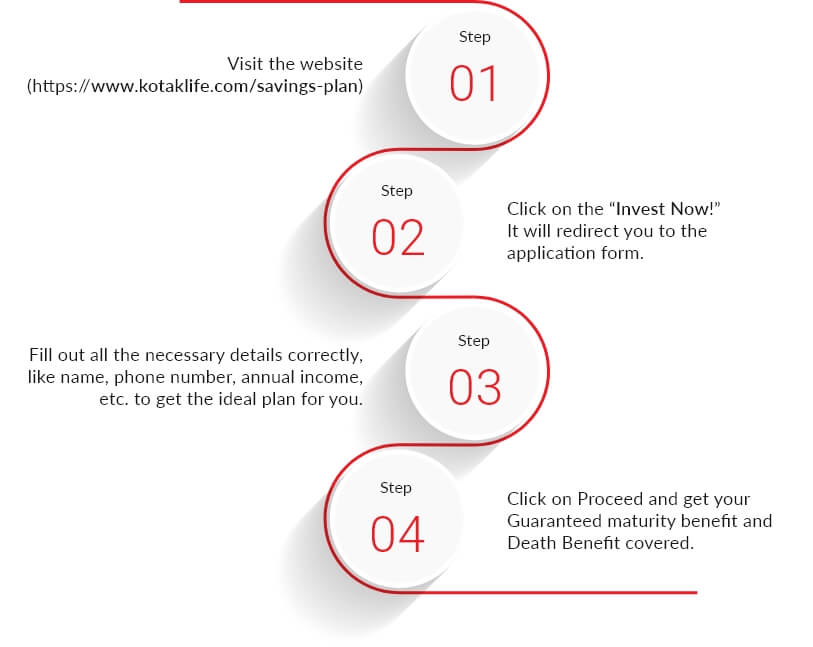
Steps to Buy a Savings Plan Online

Buying a savings plan online is easy. Here is what the process looks like on Kotak Life's platform:


Step 1: Visit the Website

Go to Kotak Life's official savings plan page and browse the available plans.

Step 2: Use the Premium Calculator

Before choosing a plan, it is wise to get a rough idea of the premium amount. You just have to enter your age, desired sum assured, policy term, and premium payment frequency in a premium calculator to get a real-time premium quote. This helps you understand the financial commitment before proceeding.

Step 3: Select Your Plan

Now that you know your premium amount, choose a plan that fits your goal, like guaranteed endowment, income plan, or ULIP. You can add any riders you want at this stage.

Step 4: Fill in Personal Details

Once you decide which plan to go ahead with, it's time to fill in your personal information. Enter your name, date of birth, contact information, annual income, and nominee details.

Step 5: Submit Proposal Form

After filling in all the information, review all details carefully before submitting.

Step 6: Complete Medical Underwriting (If applicable)

For plans above a certain sum assured or for older applicants, a medical test may be required. The insurer coordinates the test at your convenience.

Step 7: Make Premium Payment

For the payment, you can use net banking, UPI, credit/debit card, or other available digital payment modes as per your convenience.

Step 8: Receive Policy Document

Once the proposal is accepted and payment is cleared, the policy document is issued digitally within 2–7 working days and sent to your registered email.

Start early with the Kotak Assured Savings Plan.

Documents required to buy Savings Plan online

When you are prepared to buy a saving policy, such as gold saving scheme, mutual funds, deferred savings plan, guaranteed return plans, among others, make sure you have the following paperwork:

Why Choose Kotak Life for a Savings Plan in India?

With dozens of insurers offering savings products, what actually sets Kotak Life apart? Here are the reasons why you should choose Kotak Life for a savings plan in India:

Strong Financial Foundation

Kotak Life Insurance is a subsidiary of Kotak Mahindra Bank, one of India's most respected private sector financial institutions. That backing provides financial stability and long-term reliability, which matters enormously when you are committing to a long-term year policy.

Consistently High Claim Settlement Ratio

Kotak Life has maintained a strong claim settlement record, reflecting the insurer's operational efficiency and its commitment to honoring its policies without unnecessary delays.

Wide Range of Products

From guaranteed endowment and income plans to ULIPs and participating plans, Kotak Life covers the full spectrum of financial needs. Whether you want guaranteed certainty or market-linked growth, there is a product designed for you.

Transparent Illustrations

Kotak Life provides clear benefit illustrations at both conservative and optimistic return scenarios, making it easier to set realistic expectations and plan meaningfully.

Digital-First Experience

Kotak’s online buying process is seamless. From premium calculation to policy issuance, everything is designed for your smooth digital journey.

Flexible Plan Structures

Multiple premium payment options, policy term choices, and payout structures mean you are not forced into a one-size-fits-all product. Kotak Life's range accommodates diverse income levels, risk appetites, and goal horizons.

Customer Service

A dedicated customer service team, extensive branch network, and multiple service channels (online, phone, branch) ensure that help is accessible whenever you need it.

Riders/Add-ons Available with Savings Plans

Riders are optional additions that extend the base plan's protection scope at a relatively affordable premium. Here are the common riders available with Kotak Life savings plans:

Term Benefit Rider

This rider adds a pure additional life cover on top of the base plan's death benefit. If the policyholder passes away during the rider term, an additional sum assured is paid to the nominee. It is a cost-effective way to boost the total death benefit without buying a separate term plan.

Accidental Death Benefit Rider

You must begin with an accurate assessmeIn the unfortunate event of the policyholder's demise due to an accident, this rider pays an additional sum assured over and above the base plan's death benefit.

Permanent Disability Benefit Rider

If a serious accident results in total and permanent disability, this rider provides a lump sum payout. The financial stress of permanent disability, like loss of income, medical costs, and lifestyle adjustments, is substantial. This rider can actually help you during such difficult times.

Critical Illness Plus Benefit Rider

Critical illnesses like cancer, heart attacks, kidney failure, and strokes bring massive medical expenses and often disrupt your ability to earn. This rider pays a lump sum upon diagnosis of a covered critical illness, giving you funds to manage treatment and recovery without depleting your savings.

Guardian Benefit Rider

This rider is particularly relevant for parents. If the policyholder (the parent) passes away or becomes totally and permanently disabled during the rider term, all future premiums are waived, meaning the policy continues in full force.

Accidental Disability Guardian Benefit Rider

Similar to the Guardian rider, but this one specifically triggers on accidental permanent disability. Future premiums are waived, ensuring continuity of coverage even when your ability to earn is compromised.

How to choose the right riders?

To choose the best riders, it is important to match them to your actual risk profile. If you drive long distances daily, the Accidental Death and Permanent Disability riders make sense. If you have a family history of critical illness, the Critical Illness rider is worth the additional premium. If you are a parent building a corpus for your child's education, the Life Guardian Benefit rider ensures the plan continues even if you are around anymore.

Testimonials

I was looking for a savings product that would offer me guaranteed yet good returns. I spoke with many of my friends, and most of them offered me a solution I already knew. I decided to research a bit on the internet when I found Kotak Guaranteed Savings Plan. I decided to check out the plan and loved it. It would help me plan my future goals in a much-structured manner, and that clicked. I bought it. This is a great product, and the assistance is good too. Long-term investors can benefit a lot from this, especially those who are looking for stable returns.

-Mr Rajendra Verma

Kotak Guaranteed Savings Plan Online helped me not only save a chunk of money every money through premiums but also put me into the discipline of saving. In a span of 7-10 years, I would be able to plan a few things for my house and my kids and save more and invest in growing my wealth over time. If you are looking for something that will help you get Guaranteed returns, life cover, and tax benefits, Kotak Guaranteed Savings Plan is your plan.

- Mr Abhay Vaman Sarode

Plan your finances efficiently if you want to achieve your life goals at the right time. I did it by investing in a savings plan that helped me and my family lead a stress-free life and achieve life goals. Not only that, one good feature about the product is that you get a life cover bundled with maturity benefits. Meaning in case of an unfortunate event, your family can still have the financial support to live the rainy days.

- Mr Moreshwar Daulattrao Patil

I came across Kotak Guaranteed Savings Plan when one of my friends was speaking to an insurance advisor. When asked, she said that she was planning to start investing her savings in a savings plan by Kotak Life. It offers both life cover and guaranteed returns to help you grow your wealth without any risk. All you need to do is pay a monthly premium, and you will get a pre-defined return that will be guaranteed.

- Mr Atul Mishra

Life insurance policies can help you grow your wealth at a stable rate if you choose the right product. In my case, I chose Kotak Guaranteed Savings Plan, and I am glad I did. Every month a small part of my salary goes towards saving. This corpus I can use for anything I might want to plan for the future, from buying a house to planning a vacation. In addition, their call center team and advisors help you get amazing, true insights on how these plans can help you build a good amount for the future.

- Mr Dhiren Valji Varsani

I recommend Kotak Guaranteed Savings Plan to everyone who is planning to invest in a low-risk financial instrument. It offers flexibility in choosing the premium amount, and you can start at low as 2000/month and go as high as ₹10000/month, which is great. Your returns would differ as per the premium you pay. You can check it all on their online portal. You can simply fill in your details, and the portal will open up for you. All the information from premiums to returns and life cover is mentioned there. If you are happy, you can buy it from here. That simple.

- Mr Lingeshwar Hanumanta Machhiwar

Join 2.5cr Indians

Start my Plan
Amit Raje
Reviewed By :
Prasad Pimple

Prasad Pimple has a decade-long experience in the Life insurance sector and as EVP, Kotak Life heads Digital Business. He is responsible for developing user friendly product journeys, creating consumer awareness and helping consumers in identifying need for life insurance solutions. He has 20+ years of experience in creating and building business verticals across Insurance, Telecom and Banking sectors